Search for heat pump rebates in Ontario right now and Google will happily send you to pages describing programs that no longer exist. The Canada Greener Homes Grant still ranks on page one of half the HVAC blogs in this province. It closed to new applicants in February 2024.
That matters, because people make real decisions based on those pages. They delay a purchase waiting for a grant that’s gone, or they budget around a rebate nobody can apply for anymore. So here’s the honest version, checked against what’s actually live in October 2026: one Ontario program you can apply to today, one big federal program that’s been announced but isn’t open yet, and a short list of dead programs you should stop reading about.
For the full breakdown of the provincial program, our Ontario heat pump rebate guide goes deeper. This page is the reality check.
Open now: Home Renovation Savings (HRS)
Home Renovation Savings is the main heat pump rebate actually accepting Ontario homeowners today. It launched in January 2025, replacing the old HER+ program, and it’s delivered jointly by Enbridge Gas and Save on Energy (the IESO’s conservation arm). Which one administers your file depends on how your home is heated.
How much you get depends on your current heating fuel, and the spread is bigger than most people expect:
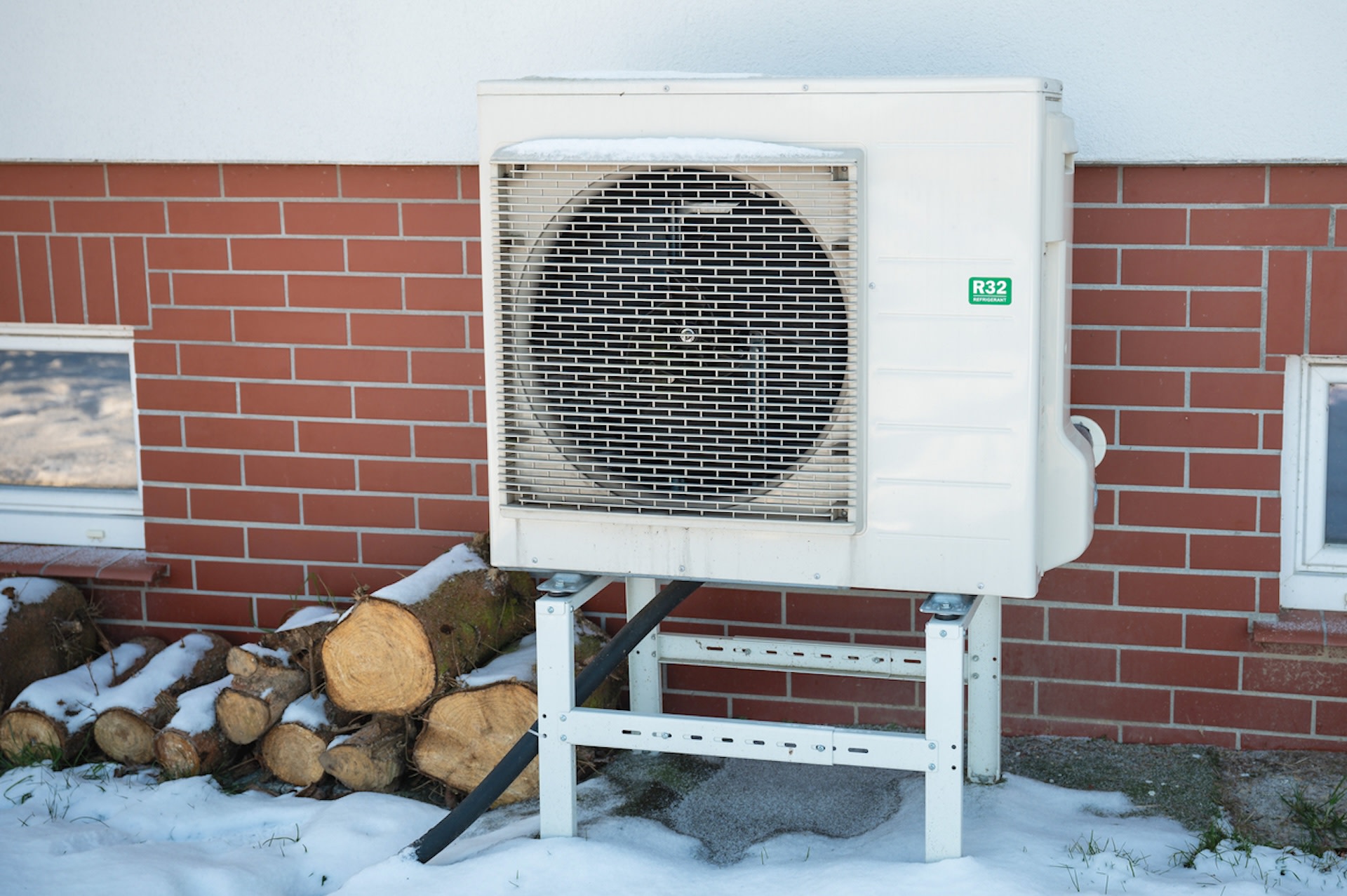
- Homes heated with electricity, oil, propane or wood: up to $7,500 for a cold-climate air-source heat pump (paid at $1,250 per ton), and up to $12,000 for a ground-source (geothermal) system.
- Enbridge natural gas homes: up to $2,000 for a cold-climate air-source heat pump ($500 per ton), up to $3,000 for ground-source. The logic is simple: if you’re already on cheap gas, the province pays less to nudge you.
- Bundling other upgrades (insulation, windows, air sealing) can raise your total, capped at $5,000 for Enbridge gas homes and $10,000 for other homes on the bundled path.
There are two paths through the program. A heat pump on its own goes through the single-upgrade path, and no home energy assessment is required. The bundled path — two or more upgrades — does require a pre-retrofit energy assessment, and that assessment has to happen before any work starts. Skipping that order is the most common reason bundled claims get rejected.
One rule applies to everyone: your installation has to be pre-approved, in writing, through the program before the equipment goes in. Install first and apply later, and you’re getting nothing.
On timing: HRS hasn’t published a hard end date for heat pump rebates, but the program’s current funding window is widely reported to run through November 30, 2026, and funding is allocated as applications come in. Programs like this have a habit of closing early when the money runs out — the Greener Homes Grant did exactly that. If you’re planning a fall install, treat November 30 as your working deadline and get the pre-approval filed now, not in December.
Coming soon: the new federal $10,000 heat pump rebate
On October 8, 2026, the federal government announced a $2 billion retrofit package built around a new National Heat Pump Rebate. It’s aimed at up to 820,000 households, and the design is deliberately simpler than the Greener Homes era:
- Up to $10,000 if your household income is below your province’s median after-tax income.
- $2,000 for other eligible households.
- No energy audit — no pre- or post-retrofit assessment at all.
- Applications run through an online portal, with approval promised within 24 hours and payment by direct deposit shortly after you upload your receipts.
- The equipment has to be an eligible cold-climate air-source heat pump from the program’s approved product list.
Two honest caveats. First, the program is not open yet. The portal doesn’t exist, the Ontario income cut-off hasn’t been published, and the launch is targeted for early 2027. Anyone who tells you they can file your federal application today is making it up. Second, whether a heat pump installed this fall — before the portal opens — will qualify retroactively has been reported in the news but not confirmed by Ottawa. It may well be covered. It also may not be.
So what do you do if your furnace is 18 years old and making noises right now? Don’t freeze for six months waiting on an unconfirmed rebate. Get quotes that price a heat pump option, pick a model that’s on the eligible lists, keep every receipt and invoice, and if the HRS rebate applies to you, claim the money that’s actually on the table today. If the federal program later covers fall installs, your paperwork is ready. Our federal heat pump rebate page tracks what’s confirmed as Ottawa publishes the final rules.
Closed: stop applying to these
Canada Greener Homes Grant. Closed to new applicants in February 2024. The final paperwork deadline for people already in the program passed on December 31, 2025. If a website is still walking you through how to apply for it, that page is a museum piece.
Canada Greener Homes Loan. The 0% interest loan (up to $40,000) closed to new applicants on October 1, 2025. Existing borrowers keep their terms, but nobody new can get in.
Oil to Heat Pump Affordability Program. The federal direct intake closed July 31, 2026. One exception: income-qualified Ontario homes heated with oil can still access a no-cost heat pump through Save on Energy’s Energy Affordability Program, which delivers the same funding provincially. If that’s your situation, it’s worth a call.
Can you stack the rebates?
Partly, and the answer depends on which programs you mean. The federal government has said plainly that the new National Heat Pump Rebate can be combined with existing provincial programs — stacking with HRS is the intended design, not a loophole. A below-median-income household in an electrically heated home could, on paper, be looking at the HRS amount plus up to $10,000 federal once that program opens.
What you can’t do is claim the same cost twice inside one program, or resurrect the closed Greener Homes money to pad the total. And until Ottawa publishes the federal rules, any exact stacked total is an estimate, not a promise. Budget around the HRS rebate you can apply for today. Treat the federal money as a bonus if and when it lands.
What a heat pump actually costs in Toronto after rebates
Installed prices vary with home size, ductwork condition and whether you’re adding a heat pump to an existing furnace (a hybrid setup) or going all-electric. As typical Toronto ranges: a cold-climate air-source heat pump, fully installed, generally runs about $12,000 to $22,000 before incentives. A hybrid install that keeps your gas furnace as backup usually lands at the lower end of that range.
Run the rebates against the middle of that range — say a $16,000 install:
- Electrically heated home, HRS: up to $7,500 back, bringing the net cost to roughly $8,500.
- Enbridge gas home, HRS: $2,000 back, net roughly $14,000 — with lower gas bills in shoulder seasons and full air conditioning in summer.
- If the federal rebate opens as announced: subtract another $2,000, or up to $10,000 for below-median-income households, from either scenario.
Those are typical ranges, not quotes. Your number depends on your home, and the only way to pin it down is an in-home quote with the rebate math done for your specific heating setup. Details on systems and sizing are on our heat pump installation page.
Frequently asked questions
Do I need a home energy assessment?
For a heat pump alone through HRS, no. The single-upgrade path skips the assessment entirely. If you’re bundling two or more upgrades (insulation, windows and a heat pump, for example), yes — a pre-retrofit assessment is mandatory, and it has to be completed before work begins. The announced federal rebate requires no audit at all.
What if I already installed a heat pump this fall?
Your HRS rebate is safe if you had written pre-approval before the install — that’s the step that locks it in. For the federal rebate, retroactive eligibility for pre-launch installs has been reported but not confirmed. Keep your invoices, receipts and the equipment model and serial numbers in one folder so you can file the day the portal opens if Ottawa allows it.
Enbridge or Save on Energy — which one am I?
It follows your heating fuel. Enbridge Gas administers the program for homes primarily heated with natural gas, which is why gas homes get the lower heat pump amounts. Homes heated with electricity, oil, propane or wood fall under Save on Energy and the higher amounts. Your contractor confirms which stream your file belongs to during the pre-approval.
How long does the rebate take?
Through HRS, a full cycle — pre-approval, installation, paperwork submission, payment — typically takes three to six months. Rebate paperwork is due within 30 days of installation, so don’t let invoices sit in a drawer. The federal program is promising a much faster turnaround (24-hour approval, payment within days of uploading receipts), but that’s a design target for a program that hasn’t launched yet.
Does the rebate cover ductless systems?
Yes, generally. Ductless mini-split heat pumps are air-source heat pumps, and cold-climate ductless models on the programs’ eligible product lists qualify under both HRS and the announced federal rebate. The system has to be sized and rated for Canadian winters — a warm-climate unit won’t make the list.
Get the rebate math done for your home
EcoCare Home Comfort installs rebate-eligible heat pumps across Toronto and the GTA, and we handle the HRS pre-approval paperwork with you before any work starts — so the rebate is locked in, not hoped for. If your furnace is near the end of its life, we’ll price both a furnace replacement and a heat pump option side by side, with the rebates you’re actually eligible for today factored in. Call us at (888) 929-2270 for a free quote, and we’ll tell you straight which programs apply to your home and which ones are already gone.