It’s 11 p.m., it’s −10°C outside, and the vents in your house are blowing air that’s lukewarm at best. Maybe cold. Your first thought is probably the same one every Toronto homeowner has in that moment: great, the furnace picked tonight to die.
Take a breath. In our experience, about half the time a furnace blows cold air, the problem is something small — a setting, a filter, a sensor coated in grime. Stuff you can check yourself in two minutes, sometimes fix for free. The other half does need a technician, and this guide will help you tell the difference before you spend a dollar.
Here’s how to work through it, in the same order we’d check things if we were standing in your basement.
The 2-Minute Quick Check (Do This First)
- Thermostat: Is it set to HEAT — and is the fan set to AUTO, not ON? If the fan is ON, it blows air around the clock, even between heating cycles, and that air feels cold.
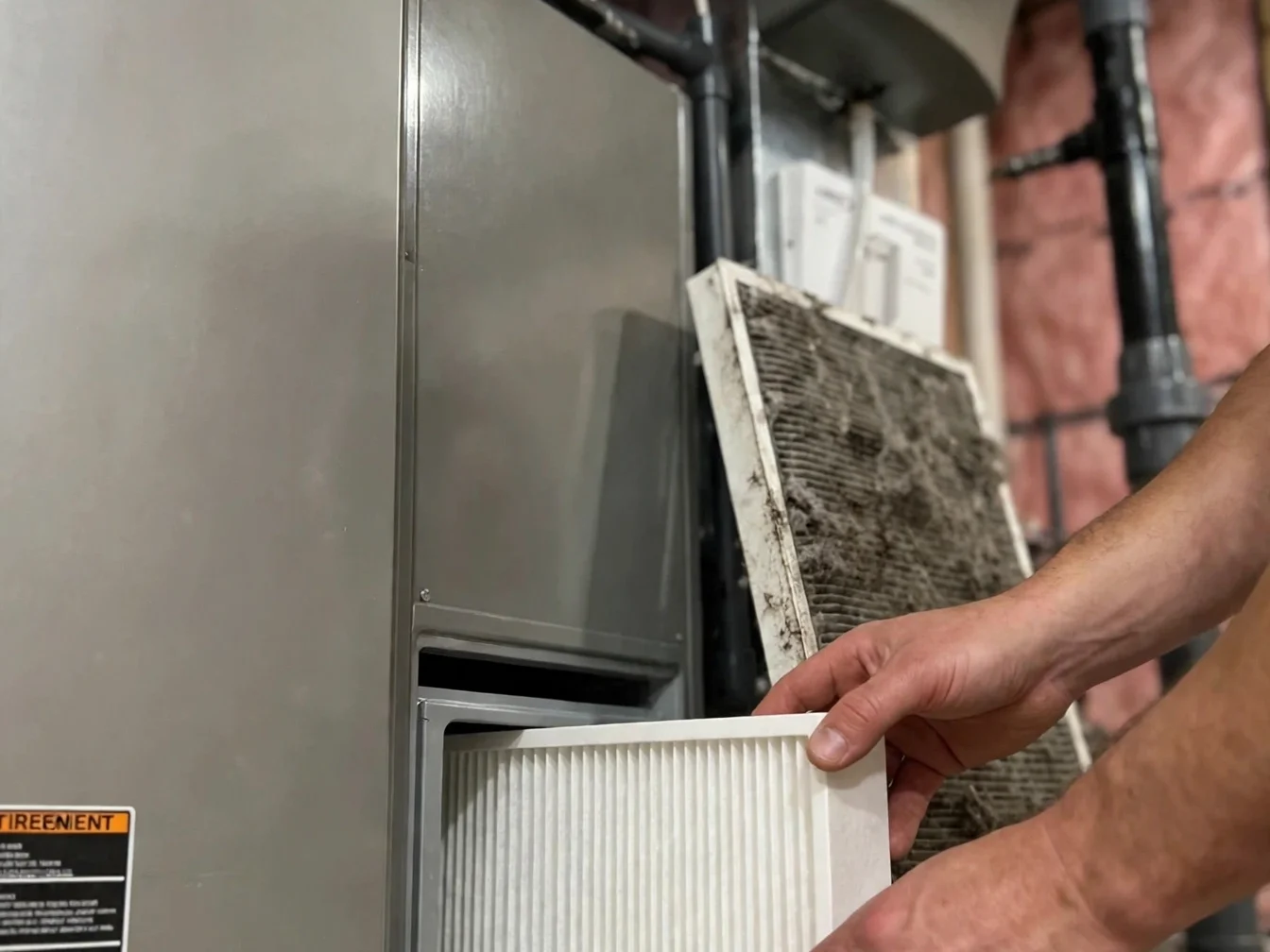
- Filter: Pull it out and hold it up to a light. If you can’t see light through it, it’s clogged. A dirty filter alone can cause everything you’re feeling right now.
That quick check sorts out a surprising number of “broken furnace” calls. Still blowing cold? Work through the seven causes below.
1. Your Thermostat Settings (or the Thermostat Itself)
This one’s embarrassingly common. Someone bumped the thermostat, a kid played with it, or the schedule reverted after a power flicker. The furnace isn’t broken at all — it’s just doing what it’s told.
Check that the system is set to HEAT, the temperature is set a few degrees above room temperature, and the fan is on AUTO. While you’re there, swap the thermostat batteries if it has them. A dying battery can make a thermostat do strange, half-working things.
If the display is blank or the furnace only responds sometimes, the thermostat itself may be failing. That’s a relatively cheap fix — but if a new battery and correct settings don’t change anything, move down the list.
2. A Clogged Air Filter
Your furnace needs to breathe. When the filter is packed with dust, pet hair, and a summer’s worth of gunk, airflow drops. The heat exchanger then gets too hot, a safety switch trips, and the burners shut off — while the fan keeps pushing air through the ducts. Result: cold air from the vents and a furnace that seems to run forever without warming the house.
Slide the filter out. If it’s grey, matted, or you can’t remember when you bought it, that’s your answer. Replace disposable filters every 1–3 months during heating season — in a Toronto winter, your furnace runs a lot, and filters clog faster than most people think.
Swap in a clean filter, give the furnace ten minutes, and see if warm air returns. Costs you ten bucks. This is honestly the fix for a huge share of cold-air complaints.
3. Pilot Light Out or Ignition Failure
No flame, no heat. Simple as that. What lights the flame depends on your furnace’s age.
Older furnaces (roughly pre-2010) usually have a standing pilot light — a small flame that burns constantly. If it goes out, often from a draft or a worn thermocouple, the burners never fire. You can relight it following the instructions printed on the furnace door, but if it won’t stay lit, stop there. A pilot that keeps dying is telling you something.
Newer furnaces use electronic ignition — either a hot surface igniter that glows orange or a spark igniter. Igniters crack and fail with age; it’s one of the most common repairs we do. You might hear the furnace try to start, click a few times, then give up. That part needs a technician, and it’s a mid-range repair, not a catastrophe.
4. A Dirty Flame Sensor
The flame sensor is a thin metal rod that sits in the burner’s flame and confirms, yes, there’s actually fire. Over time it builds up a layer of oxidation and soot. Once it’s dirty enough, it can’t sense the flame properly — so the furnace does the safe thing and shuts the burners down seconds after they light. The fan, meanwhile, keeps blowing. Cold air again.
The tell-tale sign: your furnace fires up, runs for a few seconds or a minute, then shuts off, over and over.
A technician cleans the sensor with fine abrasive in about five minutes, and it’s often included in a standard service call. Handy homeowners do attempt this themselves, but you’re working next to gas components — if you’re not fully comfortable, it’s not worth it. This is one of the cheapest professional fixes on this list.
5. Duct Leaks, Closed Registers, or Blocked Vents
Sometimes the furnace is fine and the heat is getting lost on the way. Ductwork runs through cold basements, crawl spaces, and attics. A disconnected joint or a big leak in an unheated space can bleed off so much warmth that the air reaching your bedroom feels like nothing.
Walk the house. Are some rooms warm and others cold? That pattern points at ducts or vents, not the furnace. Check that registers aren’t closed or buried under furniture and rugs — it happens every winter. Then, if you can access the basement ductwork, look for obvious gaps, separated sections, or that one run of duct tape from 2009 that’s finally given up.
Small gaps can be sealed with foil tape (not the fabric “duct tape,” ironically). A disconnected duct run or a room that never warms up even with everything open is worth a professional look — our furnace services include duct and airflow checks as part of a diagnostic visit.
6. An Overheating Furnace That’s Cycling Off
A furnace that overheats shuts its burners down to protect itself, cools off, fires up again, overheats again. Short, useless cycles. You’ll notice the house never quite reaches temperature and the air swings between warm-ish and cool.
The usual trigger is restricted airflow — yes, the filter again — but it can also be a failing blower motor or a faulty high-limit switch, the safety device that decides things are too hot. The switch itself can wear out and start tripping at temperatures that are perfectly normal.
If a fresh filter doesn’t stop the cycling, don’t keep resetting the furnace and hoping. Repeated overheating stresses the heat exchanger, and that turns a moderate repair into a very expensive one. This is “call a tech” territory.
7. The Serious Ones: Cracked Heat Exchanger or Failing Blower Motor
Two problems you don’t want, and shouldn’t ignore.
A cracked heat exchanger is the big one. The heat exchanger is the metal chamber that separates combustion gases from the air you breathe. Years of heating and cooling cycles can crack it. Signs include a furnace that struggles to heat, strange smells, soot around the unit — and, critically, the risk of carbon monoxide leaking into your home’s air. A cracked heat exchanger usually means replacing the furnace; on an older unit it rarely makes financial sense to repair. If replacement is where you land, it helps to know what furnace installation in Toronto actually involves and costs before you decide anything.
A failing blower motor is the other one. The blower is what pushes heated air through your ducts. When it’s dying, airflow drops to a trickle, air comes out weak and lukewarm, and you may hear squealing, grinding, or a humming motor that never quite gets going. A weak capacitor is sometimes the real culprit — a cheaper fix — but a dead motor is a significant repair.
Either way: if you smell gas, hear loud banging, or your carbon monoxide alarm goes off, skip the troubleshooting entirely. Get out, call 911 or your gas utility, then call us.
When to Stop DIY and Call a Professional
Filters and thermostat settings? Fair game. Beyond that, call it in if any of these sound familiar:
- You smell gas or rotten eggs anywhere near the furnace.
- Your carbon monoxide alarm has gone off, or anyone in the house has headaches, dizziness, or nausea that clears up outside.
- The furnace repeatedly shuts down, needs resetting, or the pilot won’t stay lit.
- You hear banging, grinding, or squealing.
- You’ve done the quick checks and the air is still cold after 30 minutes.
Heating season in Toronto is not the time to gamble on a guess. Our team handles emergency furnace repair in Toronto around the clock, and a proper diagnostic beats three weekends of YouTube troubleshooting every time.
Frequently Asked Questions
Why is my furnace running but not producing heat?
Usually one of three things: the fan is set to ON so it blows between heating cycles, the burners aren’t lighting (ignition or flame sensor trouble), or a clogged filter overheated the furnace and tripped a safety switch. Do the two-minute quick check first — it resolves a good share of cases.
Can a dirty filter really cause cold air?
Yes, genuinely. A clogged filter starves the furnace of airflow, the heat exchanger overheats, the limit switch kills the burners, and the fan keeps circulating unheated air. It’s the single most common cause we see, and the cheapest to fix.
How much does furnace repair cost in Toronto?
Most common repairs land between $150 and $900, depending on the part. Cleaning a flame sensor sits at the low end, an igniter is typically a few hundred dollars, and a blower motor replacement runs toward the top of that range. A cracked heat exchanger is the exception — on an older furnace, replacement usually makes more sense than repair.
How fast can a technician get to my home?
With EcoCare, same-day in most cases. We offer 24/7 emergency service across Toronto and the GTA, because furnaces have a well-known habit of quitting at 11 p.m. on the coldest night of the year.
Should I just run the furnace and hope it fixes itself?
No. Furnaces almost never heal. A small ignition problem ignored all winter becomes a dead furnace in February — and repeated overheating can damage the heat exchanger, which is where repair bills get serious. Cold air is your furnace asking for help early, while the fix is still cheap.
Cold Air Tonight? We’ll Fix It.
If you’ve run through the checks above and your vents are still blowing cold, it’s time to bring in EcoCare Home Comfort. We provide 24/7 emergency furnace repair across Toronto and the GTA — Scarborough, North York, Etobicoke, Markham, Richmond Hill, Vaughan, and beyond. Our technicians will find the actual cause, explain your options in plain language, and give you an honest price before any work starts.
Call us at (888) 929-2270 for a free quote, day or night. Winter in this city is long enough without spending it in a cold house.